
Culture & customs
Visiting respectfully: Tara Bandu and sacred places
Timor-Leste’s rich cultural heritage is deeply intertwined with its natural landscape, governed by ancient customary laws that mandate respect for both people and the environment.
16 November 20262 min readLaurentina Canto
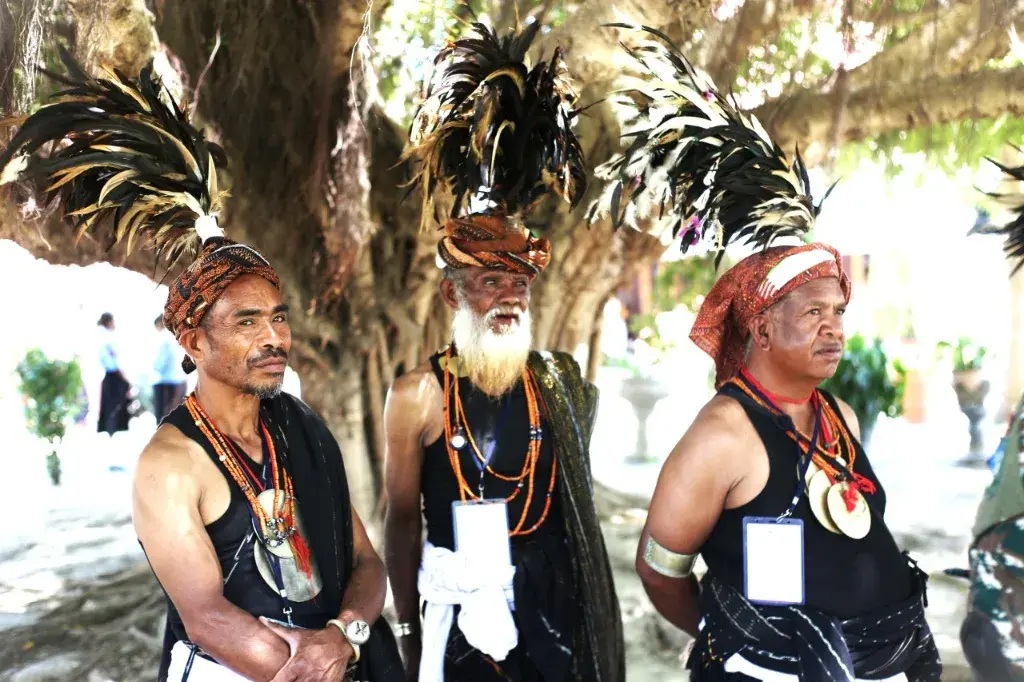
Understanding Tara Bandu
At the heart of local community governance is Tara Bandu, a traditional, customary law used to regulate behavior and manage relationships between humans, nature, and the spiritual realm.
This indigenous system serves as a community agreement that protects natural resources—such as forests, marine areas, and harvests—while safeguarding sacred sites and maintaining social harmony. Because Tara Bandu is deeply rooted in local community councils, the specific rules, restrictions, and protected zones can differ significantly from one village to the next. What is permissible in one district may be strictly prohibited in a neighboring area, making local awareness crucial.
The Sacred House: Uma Lulik
The Uma Lulik (Sacred House) is the spiritual and cultural center of Timorese family and community life. These towering, traditional structures are not just architectural marvels; they house sacred heirlooms, serve as gathering places for ancestral ceremonies, and represent the lineage and identity of the community.
Entering or even approaching an Uma Lulik requires strict adherence to local customs. They are highly revered, and unauthorized access is deeply offensive to the community and their ancestors.
Essential Guidelines for Respectful Visitors
To ensure your visit is respectful and welcomed by local communities, always adhere to the following best practices:
- Always ask for permission: Never enter an Uma Lulik, cross into a protected agricultural zone, or explore a sacred natural site without explicit permission from a local elder or community leader.
- Follow your host or guide: A knowledgeable local guide is invaluable. They understand the specific Tara Bandu regulations of their village and can mediate introductions with village elders. Always defer to their instructions on where to walk, what to wear, and how to behave.
- Leave everything exactly as you found it: Never touch, move, or take anything from a sacred site or protected natural area. This includes stones, flora, artifacts, and offerings.
- Practice "Leave No Trace": Carry all of your litter out with you. Disposing of trash in a Tara Bandu zone or near an Uma Lulik is considered highly disrespectful and a violation of the customary protection of the land.
By honoring Tara Bandu and the sanctity of the Uma Lulik, you actively participate in the preservation of Timor-Leste's unique cultural and environmental heritage.
More news
 16NOV
Travel tips
Reaching Ataúro by Ferry: Essential Travel Tips from Díli
Just a short voyage from the bustling coastal capital of Díli lies Ataúro Island, a pristine destination renowned for its incredible biodiversity, crystal-clear waters, and tranquil atmosphere. Taking the ferry is the simplest and most popular way to reach this island paradise.
3 min readLaurentina Canto